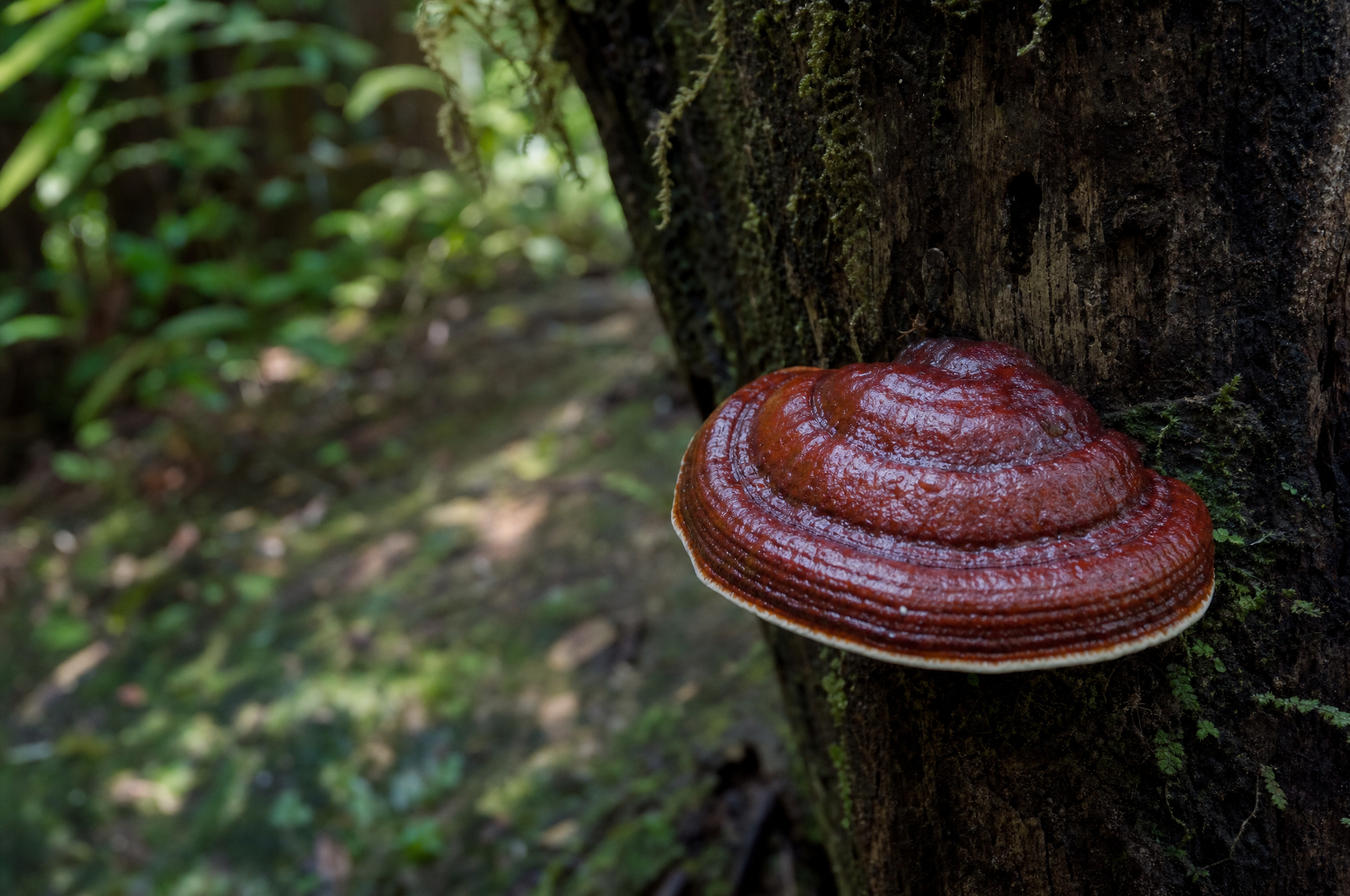
Here's something most supplement marketing won't tell you: eating raw or dried mushroom powder may give you almost none of the bioactive compounds you're after. The cell walls of fungi are made of chitin — the same tough material in insect exoskeletons. The most studied medicinal compounds in functional mushrooms are locked inside those chitin walls, and the human digestive system cannot break chitin down effectively.
This is why extraction matters. And it's why the method of extraction — hot water, alcohol, or both — fundamentally determines which compounds end up in the final product.
The Chitin Problem
Fungal cell walls are composed primarily of chitin and beta-glucans. Chitin is a tough, fibrous polysaccharide that is indigestible by humans in its raw form. This means that if you consume unextracted mushroom powder — say, ground-up Lion's Mane fruiting body — many of the bioactive compounds remain trapped inside the chitin matrix and pass through your digestive system without being absorbed.
Traditional cultures understood this intuitively. In Chinese medicine, Reishi is almost always prepared as a decoction — simmered in hot water for extended periods. Chaga is traditionally brewed as a tea. These preparations are, in effect, hot water extractions. The long simmering breaks down chitin and releases water-soluble compounds into the liquid.
Modern science has confirmed what traditional practice intuited: extraction isn't optional for functional mushrooms. It's how you access the compounds.
Hot Water Extraction: The Polysaccharide Pathway
Hot water extraction involves simmering mushroom material in water (typically 80–100°C) for an extended period — often 1–3 hours. This process dissolves water-soluble compounds, primarily:
- Beta-glucans — the polysaccharides most associated with immune-modulating effects. These are the primary compounds in Turkey Tail, Reishi, and Cordyceps research.
- Other polysaccharides — complex sugars with various biological activities
- Proteins and peptides — some bioactive proteins are water-soluble
- Water-soluble vitamins and minerals
After simmering, the liquid is separated from the mushroom material and concentrated — often by evaporating the water — to produce an extract powder. The resulting product is typically standardized to a specific beta-glucan percentage.
Hot water extraction is the gold standard for polysaccharide extraction and is used in most clinical research on medicinal mushrooms. The PSK and PSP compounds from Turkey Tail (discussed in our Turkey Tail article) are produced via hot water extraction of mycelial cultures.
Alcohol Extraction: The Triterpene Pathway
Some of the most important compounds in functional mushrooms are not water-soluble — they are alcohol-soluble (lipophilic). These include:
- Triterpenes — ganoderic acids in Reishi, responsible for much of its research interest
- Sterols — including ergosterol, the precursor to vitamin D2
- Lipophilic pigments
Alcohol extraction typically uses ethanol (drinking alcohol) at concentrations of 60–95%. The mushroom material is soaked in alcohol for days to weeks, after which the liquid is filtered and concentrated.
Reishi is the classic case. Its two main compound classes — polysaccharides and triterpenes — require different extraction methods. A hot water extract of Reishi will contain polysaccharides but almost no triterpenes. An alcohol extract will contain triterpenes but lose most polysaccharides. To get both, you need dual extraction.
Dual Extraction: The Best of Both?
Dual extraction combines both methods. The mushroom material is first hot-water extracted to pull out water-soluble compounds, then alcohol-extracted to pull out lipophilic compounds. The two extracts are then combined.
In theory, this produces the most comprehensive extract — capturing both polysaccharides and triterpenes. In practice, quality varies enormously depending on:
- The ratio of mushroom to solvent
- Temperature and duration of each extraction
- Alcohol concentration used
- How the two extracts are combined and concentrated
- Whether the final product is standardized to specific compound levels
A "dual extract" label without standardized compound percentages tells you very little about what's actually in the product.
Which Method for Which Mushroom?
| Mushroom | Key Compounds | Recommended Extraction |
|---|---|---|
| Reishi (Ganoderma) | Polysaccharides + Triterpenes | Dual (hot water + alcohol) |
| Lion's Mane (Hericium) | Polysaccharides + Hericenones/Erinacines | Hot water (for beta-glucans); alcohol for hericenones |
| Cordyceps | Polysaccharides + Cordycepin | Hot water (cordycepin is water-soluble) |
| Turkey Tail (Trametes) | Beta-glucans (PSK/PSP) | Hot water |
| Chaga (Inonotus) | Polysaccharides + Melanins + Betulin | Hot water (traditional); dual for betulin |
Mycelium vs. Fruiting Body: It Affects Extraction Too
As we discussed in the Cordyceps species comparison, different parts of the mushroom contain different compounds. Lion's Mane hericenones are in the fruiting body; erinacines are in the mycelium. This means the extraction method must match the part being used — and the compound being targeted.
Many commercial supplements use mycelium grown on grain (often called "mycelial biomass"). These products may contain significant amounts of residual grain substrate, diluting the actual mushroom content. Look for supplements that specify "fruiting body" and provide beta-glucan testing. For more on this, see our supplement label guide.
The Bottom Line
Extraction is not a marketing gimmick — it is a fundamental determinant of what compounds you receive. A raw mushroom powder and a hot water extract of the same mushroom are essentially different products with different compound profiles. When evaluating a mushroom supplement, understanding extraction method is as important as understanding species.
But extraction alone doesn't guarantee quality. Standardization (testing for specific compound percentages), source quality, and honest labeling all matter. The best products are transparent about all of these factors.